
Clarity-Q®: A Comprehensive Trial Design Reflecting Field Reality
Dennis SmuldersThe post-weaning period is one of the most critical phases in swine production. Piglets are exposed to abrupt changes in diet, environment, and microbial pressure, while their digestive and immune systems are still immature. This makes them highly susceptible to intestinal disturbances, reduced feed intake, and enteric infections such as E. coli, often leading to long-term impacts on growth performance and uniformity.
To address these challenges, nutritional strategies must focus on:
- Maintaining intestinal integrity
- Controlling inflammation
- Supporting microbiota stability
Clarity-Q® mode of action
Clarity-Q® is based on an encapsulated Quillaja saponin extract. Its encapsulation technology enables a controlled release of triterpenic saponins along the gastrointestinal tract.
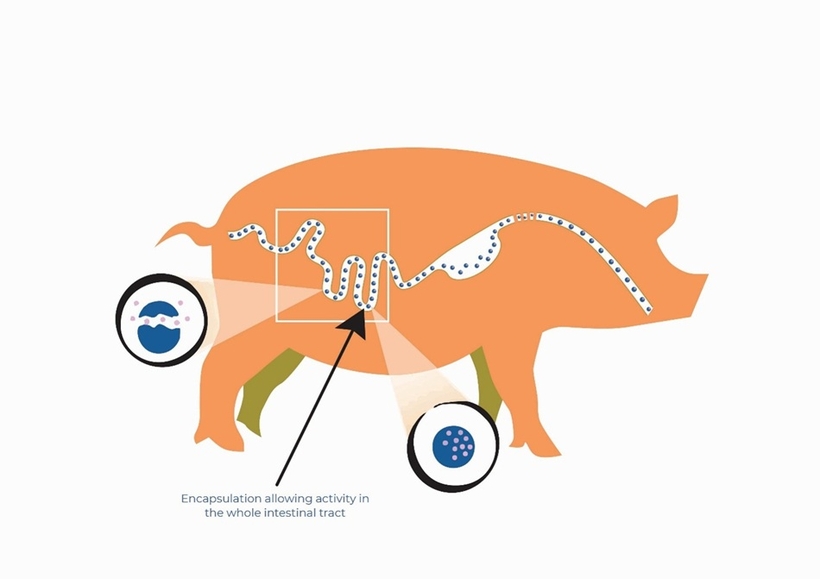
Triterpenic saponins provide a dual mode of action relevant to post-weaning challenges:
- Immune modulation - stimulates innate and adaptive immune responses, including macrophage and lymphocyte, supporting faster pathogen response and enhanced antibody production1
- Antimicrobial activity - interaction with microbial cell membranes, including disruption of the lipopolysaccharide layer of Gram-negative bacteria, reducing pathogen viability without harming host cells1,2
Trial overview
A study conducted at Dankook University, South Korea, evaluated the effect of Clarity-Q® in weaned piglets challenged with enterotoxigenic E. coli expressing K88.
- Inclusion rate: 375 g/ton feed
- Challenge: 5.2 x 10⁹ CFU/pig at day 14 post-weaning
- Model: Moderate intestinal challenge reflecting field conditions
Key results
1. Inflammation and oxidative stress (24h post infection)
The E. coli challenge significantly increased inflammation and oxidative stress in the positive control (PC) group compared to the non-challenged control (NC).
Clarity-Q® supplementation resulted in:
- Reduced TNF-α (inflammatory marker)
- Improved antioxidant status (SOD (superoxide dismutase))
- Reduced oxidative damage (MDA (malondialdehyde))
Clarity-Q® helped restore inflammatory and oxidative parameters towards non-challenged levels (Table 1).
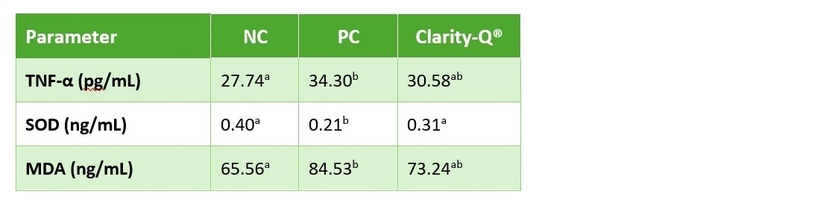
Table 1. Inflammatory and oxidative parameters 24 hours post infection. Different letters mean a significant difference at p<0.05
2. Intestinal health and immune response (2 weeks post challenge)
Jejunal mucosa analysis showed that the E. coli challenge increased inflammatory markers and disrupted gut integrity.
Clarity-Q® supported improvements in:
- Pro-inflammatory cytokines (TNF-α, IL-8, IL-1β)
- Cell signalling and mucosal activity (mTOR, MUC2)
- Cell proliferation (K167)
- Tight junction proteins (gut barrier integrity; ZO-1, CLDN1, OCLN, MUC2)
Results indicate reduced inflammation, improved cellular activity, and better intestinal barrier integrity (Table 2).
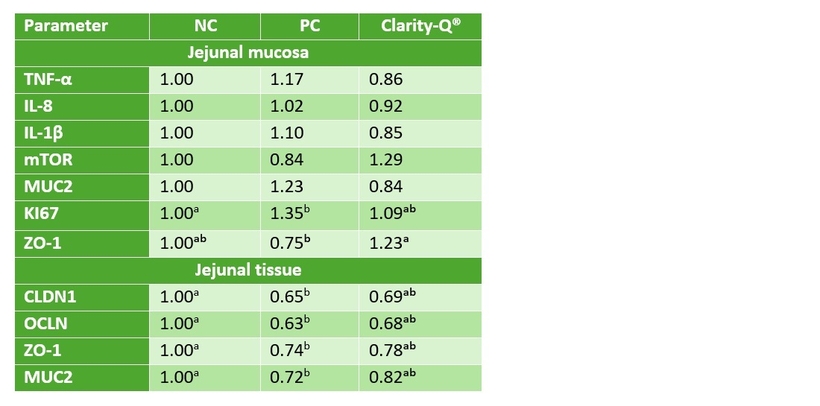
Table 2. Pro-inflammatory cytokines and jejunal tight junction proteins 2 weeks post challenge. Different letters mean a significant difference at p<0.05
3. Growth performance
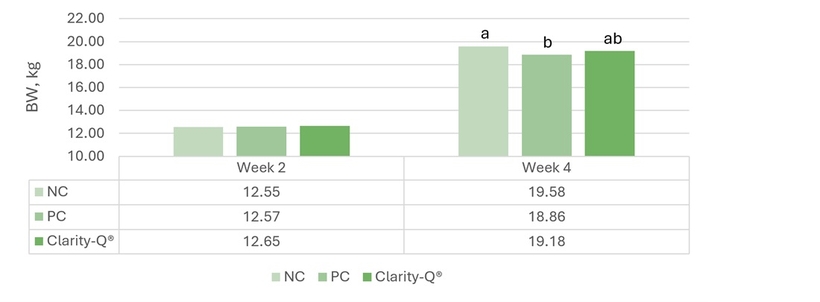
Figure 1. Body weight (BW) at 2 weeks post challenge
Body weight (BW) at 2 weeks post challenge:
- The PC group showed reduced growth due to the challenge
- The Clarity-Q® group was intermediate between the PC and NC groups
The results indicate partial recovery of performance under challenge conditions (Figure 1).
Conclusion
This study demonstrates that Clarity-Q®:
- Reduces inflammation (TNF-a, IL-1b, IL-8)
- Improves antioxidant status (SOD) and reduces oxidative stress (MDA)
- Supports gut barrier integrity (ZO-1, CLND1, OCLN)
- Promotes intestinal functionality and cellular activity (mTOR, K167, MUC2)
- Helps maintain growth performance under an E. coli challenge
Clarity-Q® provides a comprehensive solution to support piglet resilience during the post-weaning period, under conditions closely reflecting field reality.