
Comparing The Efficacy Of Frequently Used Ionophores
Ben DehaeckCoccidiosis is an important disease in broiler production. It impairs intestinal health, leading to large economic losses. When evaluating the prevalence of the three most relevant broiler species (E. acervulina, E. maxima and E. tenella), E. acervulina has the highest prevalence in Europe overall.
The goal of this analysis was to compare three of the most widely used ionophores in the field on their efficacy to control the different Eimeria species:
- monensin (Coxidin®)
- salinomycin (Sacox®)
- narasin
Study design
The data used for this analysis was collected from 14 different European countries between 2019 and 2024. All birds were raised in field conditions and health scoring data was recorded by independent users via Aviapp, the health and performance software tool of Huvepharma. Lesion scoring was done according to the Johnson and Reid scoring system.
Results
The number of flocks, clients and countries used to calculate the efficacy of the different ionophores on the different Eimeria species are shown in Table 1.

Table 1. Number of flocks, clients and countries included in the study by ionophore
Figure 1 shows that birds on salinomycin had the lowest average E. acervulina score followed by monensin and narasin. The age at which the average highest score was noted was similar for all ionophores (25 days).
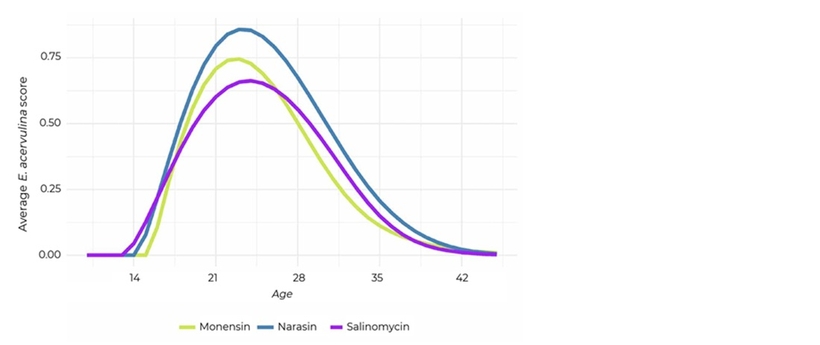
Figure 1. Average E. acervulina score for the different ionophores by age of the birds
Figure 2 shows the average E. maxima scores for the different ionophores. Here monensin seems to be the best ionophore as it had the lowest average score, followed by salinomycin and narasin.
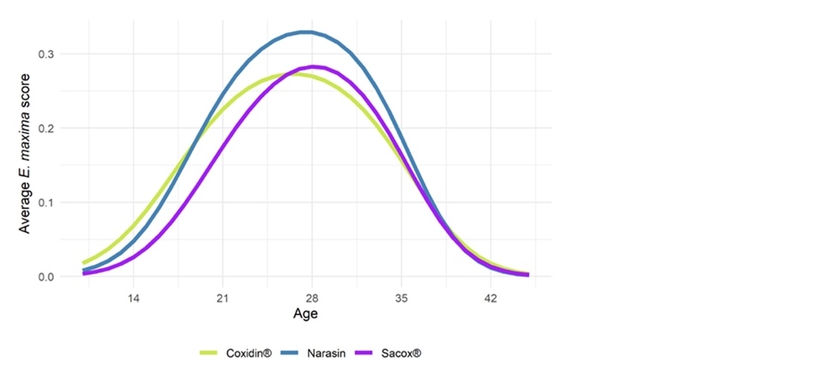
Figure 2. Average E. maxima score for the different ionophores by age of the birds
The average scores (0.07-0.12) and prevalence (5-7%) for E. tenella were very low, making a graphical representation less interesting. E. tenella problems are more often related to management issues on farms.
Conclusion
This data analysis demonstrated that across the investigated flocks, birds on salinomycin had the lowest scores for E. acervulina and birds on monensin had the lowest scores for E. maxima. This study gives a representative evaluation of the efficacy of these different ionophores as enough flocks were included. The analysis was based on recent data providing up-to-date results, confirming the efficacy of both monensin and salinomycin.