
Correct Dosing By Nanonisation Of Water-Soluble Products
Lieven ClaerhoutThe formulation of veterinary products for use in drinking water for pigs and poultry has enormous impact on the final concentration of the active substance(s) at nipple level and subsequently, in the target tissues.
Nanonisation is an advanced formulation technology developed by Huvepharma® which improves solubility of poorly soluble molecules substantially. This innovative technology enables their administration in highly concentrated stock solutions and results in correct dosing and responsible use of veterinary medicines. Nanonisation leads to sufficiently high target tissue concentration in all treated animals.
Nanonisation
As regards to the administration of veterinary products in drinking water, an increasing trend of the use of proportioners is observed worldwide. However, several highly effective antibiotic and anthelmintic active compounds demonstrate poor solubility in these highly concentrated stock solutions. This results in sedimentation or crystallisation of the active compound immediately after product administration.
Subsequent underdosing may mean the treatment is ineffective, leading to longer or higher frequency treatment periods and increases the risk of antimicrobial resistance developing. Hence, standard formulations of florfenicol, fenbendazole and trimethoprim are not suitable for use in proportioners.
To overcome this issue, Huvepharma® recently developed a unique nanonisation technology which substantially reduces particle size to the nanometre range (Figures 1 and 2, Table 1). One millimetre corresponds to one million nanometres. Nanoparticles have a much larger contact surface with water molecules, resulting in optimal distribution in the stock container and all pipelines of the drinking water system. The smaller the particle size, the better and longer particles are kept in suspension. Following nanonisation, excellent homogeneity of the active substances in the stock mixture is observed for 24 hours, leading to correct dosing and ease of use.
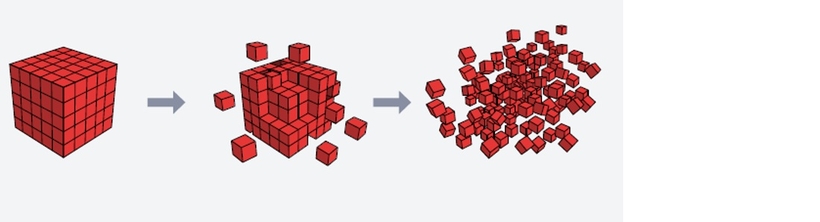
Figure 1. Principle of nanonisation
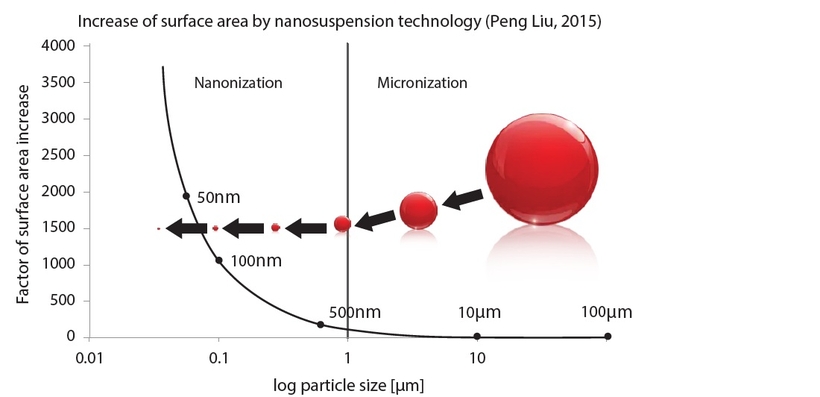
Figure 2. Increase of surface area by nanonisation
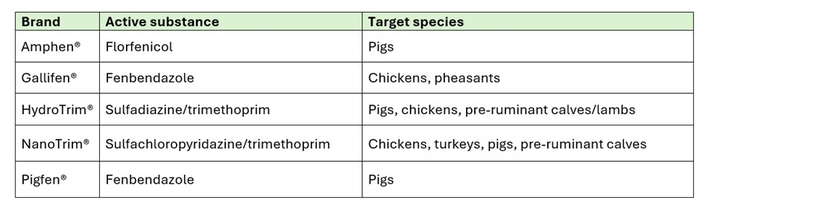
Table 1. Overview of Huvepharma®'s nanonised products for use in drinking water
Field trial
The suitability for use in proportioners was investigated for two liquid florfenicol-containing products:
- a standard florfenicol formulation
- Amphen® 200 mg/ml nanonised florfenicol
A total of 927 pigs (mean bodyweight of 25.5 kg) was assigned to two treatment groups and housed in the same compartments under the same conditions.
Pigs were treated with 10 mg florfenicol/kg bodyweight/day. Medicated water was consumed within 12 hours after the start of administration using a proportioner set at 1% injection rate.
At the start of the trial, the two stock mixtures showed equal florfenicol concentrations and volumes. Both mixtures were stirred for 20 seconds. The visual appearance in the stock containers and the florfenicol recovery at nipple level and in plasma were investigated. Water samples from 10 nipples and blood samples from 10 pigs were taken at different points after the start of administration to determine florfenicol concentrations (HPLC).
Visual appearance
Substantial sedimentation of insoluble florfenicol crystals starting immediately after mixing was observed when using the standard florfenicol formulation. On the other hand, the nanonised formulation demonstrated excellent homogeneity throughout the administration period.

Figure 3. Visual appearance of the two florfenicol stock mixtures: Amphen® Oral suspension (left) and a standard formulation (right). Pictures were taken 30 minutes after the start of administration
Recovery in drinking water
Recover in the final drinking water after 3, 6 and 10 hours was 3.6, 2.9 and 4.0 times higher, respectively, for the nanonised formulation compared to the non-nanonised formulation.
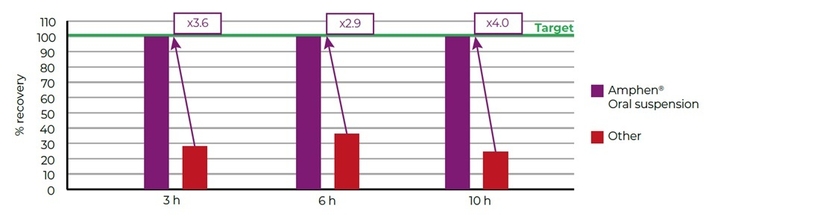
Figure 4. Mean florfenicol recovery in the final drinking water expressed as a percentage of the theoretically expected concentration at three time points after the start of administration
Plasma concentrations
Plasma concentrations after 6, 9, 12 and 24 hours were 2.2, 2.8, 2.4 and 3.4 times higher, respectively, for the nanonised formulation compared to the non-nanonised formulation.
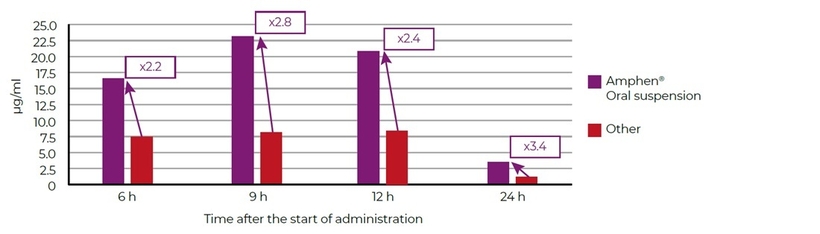
Figure 5. Mean plasma florfenicol concentrations at four time points after the start of administration
Conclusion
Nanonisation is a formulation technology especially developed for poorly soluble active compounds. Unlike standard formulations, this innovative technology results in excellent homogeneity in highly concentrated stock solutions and subsequently, in superb recovery in drinking water and in plasma. Nanonisation supports responsible use of veterinary products and sustainable livestock farming by ensuring correct dosing of veterinary products.
