
Getting The Most Out Of Fibre In Piglet Nutrition
Natalia SoaresThe post-weaning period is one of the most nutritionally challenging phases in pig production. Newly weaned piglets transition abruptly from a highly digestible milk diet to cereal- and soybean-based feeds, while their endogenous digestive capacity and gastrointestinal stability are still developing. Under these conditions, non-starch polysaccharides (NSPs) from cereals and protein meals act as anti-nutritional factors by encapsulating nutrients, limiting the access of endogenous enzymes to starch and protein, and in some cases modifying digesta rheology. This typically results in lower nutrient absorption, reduced growth rate and poorer feed conversion.
NSPs account for an important part of piglet feeds: arabinoxylans from wheat and barley, cellulose from fibre-rich plant cell walls, and xyloglucans from dicot ingredients such as soybean products are nutritionally relevant substrates in monogastric feeds. This is particularly important for piglets, because the first two weeks after weaning are often characterised by low feed intake, limited digestive resilience and high sensitivity to the anti-nutritive effects of plant NSPs. Huvezym® neXo was developed to address this substrate complexity through an enzymatic complex of xylanase, cellulase and xyloglucanase activities, thereby improving nutrient release from mixed cereal-soy diets and supporting more efficient piglet production.
Trial description
A 45-day post-weaning trial was conducted at Roslin Nutrition Ltd. (UK) using 168 weaned piglets (Large White x Duroc) which were 28 days old at the start of the study. The experimental design comprised two treatments with 21 replicates per treatment and four piglets per pen. All animals had free access to feed and water. Piglets received either the control diet or the same diet supplemented with Huvezym® neXo (at 1500 EPU xylanase, 100 CU cellulase and 100 XGU xyloglucanase per kilogram of feed). Standard performance parameters were measured, and mortality-corrected feed conversion ratio (mFCR) was calculated.
Dietary context and expected NSP substrates
The pre-starter and starter diets (Table 1) were based on wheat, barley, maize and hipro soya, with sunflower meal included in the pre-starter and potato protein included in both phases. From a fibre-degrading enzyme perspective, this substrate profile is highly relevant: wheat and barley provide arabinoxylans as primary xylanase targets; sunflower meal and cereal hull fractions contribute with cellulose; and soybean-derived fractions contribute with xyloglucans (abundant in dicot cell-walls) that can be broken down by xyloglucanase. The combination of these substrates makes the trial a good practical model to assess the value of a broad carbohydrase concept rather than a single-enzyme approach.
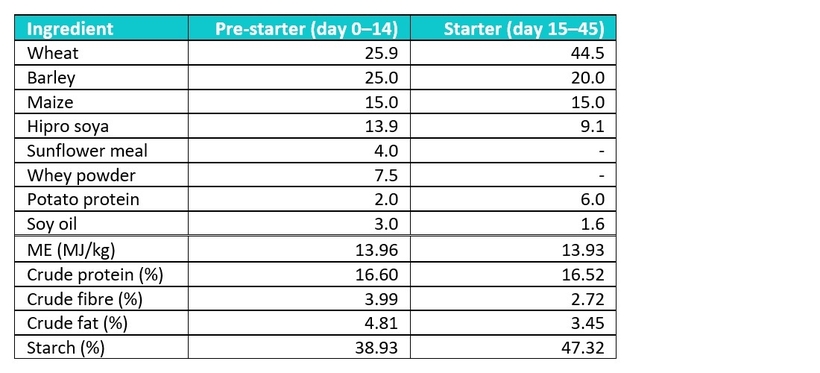
Table 1. Diet composition and calculated nutrients of the trial diets
Results and discussion
The performance results are shown in Table 2. Piglets fed Huvezym® neXo showed a clear improvement in early post-weaning growth. Average daily gain (ADG) increased from 108.4 to 122.2 g/day during the pre-starter phase (day 0-14), a gain of 12.7%, and overall ADG tended to improve from 373.1 to 399.5 g/day over the full 45-day period (+7.1%). In terms of final body weight at day 45, the supplemented group were numerically (1.05 kg) heavier than the control group. Importantly, these growth responses occurred without a significant change in feed intake, indicating that the enzyme effect was primarily driven by improved nutrient utilisation rather than a simple stimulation of appetite.
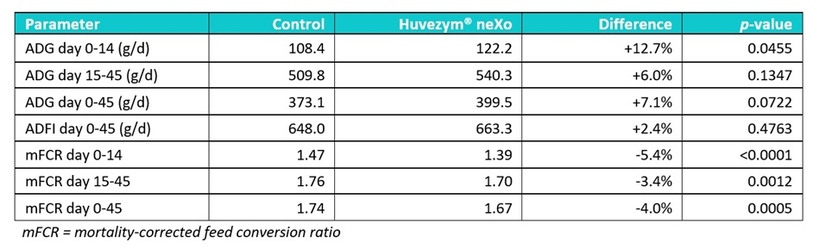
Table 2. Zootechnical performance of weaned piglets
Mode of action interpretation of the response
The most robust response variable in this trial was feed efficiency, with mFCR improving by 5.4% in the pre-starter phase, 3.4% in the starter phase and 4.0% overall. This pattern is biologically coherent with the expected mode of action of the enzymatic complex. Xylanase hydrolyses arabinoxylans from wheat and barley, reducing the physical barrier created by cereal cell walls and improving access to entrapped starch and protein. Cellulase contributes to the disruption of cellulose-rich structures that remain resistant to endogenous digestion, especially in fibre-bearing ingredients such as sunflower meal and cereal outer layers. Xyloglucanase complements these actions by breaking down xyloglucan-dicot cell-wall networks associated with soybean-derived ingredients, thereby improving the exposure of intracellular nutrients and being complementary to the other carbohydrases (Table 3).
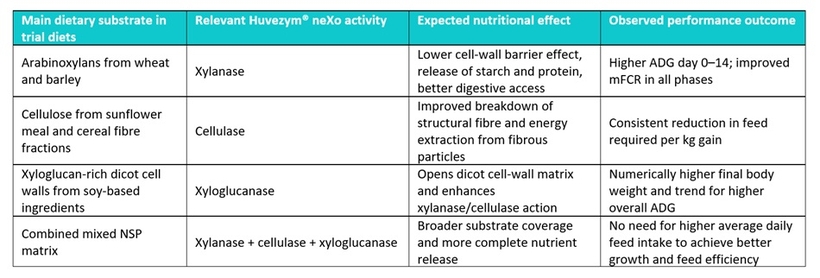
Table 3. Linking substrate, enzyme activity and performance outcome in the trial
The strong response during the pre-starter phase (day 0-14) must be highlighted. Early post-weaning piglets are the animals that most likely benefit from exogenous carbohydrases because feed intake is still low and every increase in digestible nutrient supply has a disproportionate effect on growth. The trial confirms this expectation: the largest proportional ADG improvement occurred in the first 14 days, exactly when the animal is most susceptible to NSP-related nutrient losses. Once piglets enter the starter phase, the enzyme benefit shifted from a pronounced growth effect toward a highly significant feed conversion advantage, which is commonly the most economically relevant outcome in piglet production.
Conclusion
This trial demonstrates that Huvezym® neXo is an effective nutritional tool for weaned piglets fed wheat-barley-maize-soy diets. The product significantly improved feed efficiency throughout the entire 45-day period and enhanced early post-weaning growth without changing feed intake. The response is consistent with the product concept:
- xylanase targets cereal arabinoxylans
- cellulase contributes to the breakdown of cellulose-rich fibre structures
- xyloglucanase helps open dicot cell-wall architecture associated with soy-derived fractions
Together, these activities improve nutrient release from a mixed-NSP diet, explaining why piglets required less feed per kilogram of gain and achieved numerically higher body weights by day 45. From a practical standpoint, Huvezym® neXo is a cost-effective enzymatic solution to improve the efficiency of piglet production.