
The Benefits Of The Newly Approved 0-day Withdrawal Time For Coxidin®
Ben DehaeckCoxidin® recently obtained a 0-day withdrawal time in Europe following the renewal of the BSA (Brand Specific Approval) registration.
All BSA product suppliers need to submit new data on efficacy and safety every 10 years. By doing this, efficacy and safety is demonstrated in more recent genetic chicken lines against Eimeria strains currently circulating in the field. Efficacy trials, which include Coxidin® at the lowest registered dose (100 ppm), must show a significant reduction in parasitological results (lesion scores and/or oocysts per gram (OPG)). In all trials, recently collected European Eimeria field strains (collected in the last 5 years) were used to infect the birds. All trials confirmed the efficacy of Coxidin® at the lowest registered dose of 100 ppm.
Safety trials are conducted with the highest registered dose and are designed to prove safety for the target animals and for consumers. Coxidin® was included in the feed at several concentrations between 110 and the maximum dose of 125 ppm. None of the tested concentrations had a negative influence on the birds. With the required safety margin imposed by EFSA (the European Food Safety Authority), the maximum dose for Coxidin® is now set at 120 ppm. This means the new registered dose range for Coxidin® is 100-120 ppm.
The European BSA for coccidiostats was established to overcome differences in formulation, impacting efficacy and safety for products including the same active ingredient. Coxidin® is the only monensin-containing coccidiostat in Europe with a 0-day withdrawal time.
There are multiple benefits to having a 0-day withdrawal time. The main benefit is that producers have full flexibility when using these products. Many companies have a policy to only work with 0-day withdrawal products as this eliminates possible issues with carry-over when birds go to the slaughterhouse earlier than expected. It also eliminates the need to take the coccidiostat out of the feed when thinning is applied. Thinning is still common practice in Europe, and this is mostly done around day 28-30. Data from Aviapp® shows that this is also the period of the highest pressure for both E. maxima and E. tenella. Both Eimeria species have an important impact on performance so control up to late age is key to guaranteeing the best possible flock results.
The benefits of a 0-day withdrawal time have been previously demonstrated for Sacox®, a product containing salinomycin. In a field study on a commercial farm with two identical houses divided into two compartments, a comparison was made between the application of Sacox® added to the feed until thinning and Sacox® added to the feed until slaughter age. The farm had normal coccidiosis pressure, thinning was done on day 32 and all birds were slaughtered at 40 days.
In both houses, oocysts were collected on day 26, 32 and 40. The OPG results of the birds that did not receive a coccidiostat after thinning increased significantly at the end (Figures 1 and 2) while the OPG results of the birds that received the coccidiostat until the end stayed very low (Figures 1 and 3). It is important to note that the increased number of oocysts on day 40 was mainly E. tenella. This high pressure of E. tenella can have a significant impact, leading to increased mortality or reduced growth.
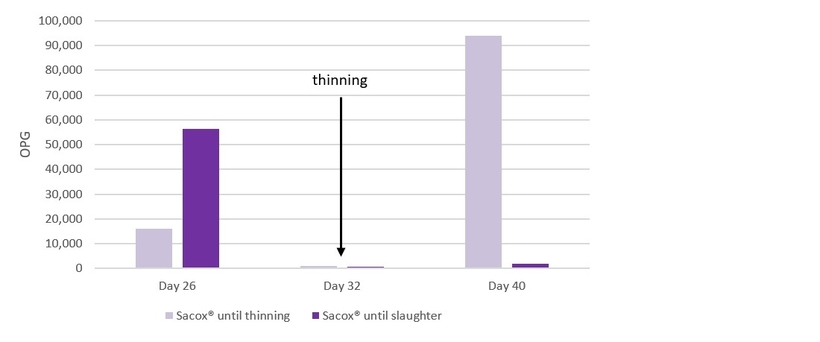
Figure 1. OPG results of the two groups on the different sample days
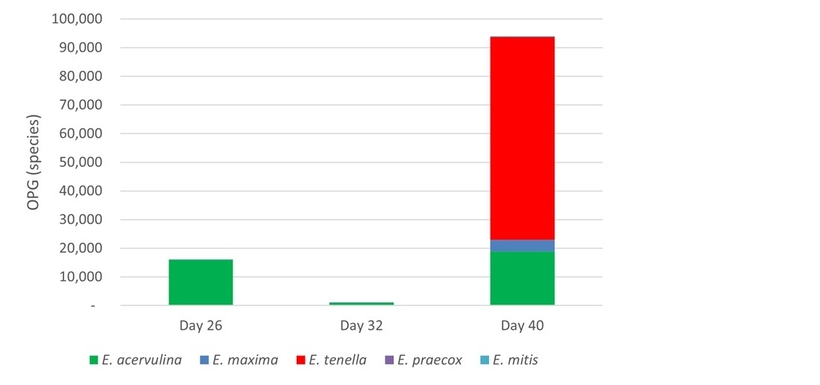
Figure 2. OPG results by species of the group that received Sacox® until thinning
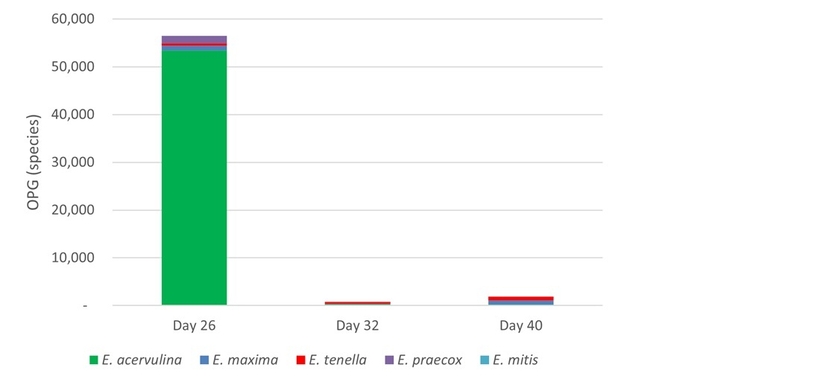
Figure 3. OPG results by species of the group that received Sacox® until slaughter
To conclude, Coxidin® now has a 0-day withdrawal time in Europe giving producers full flexibility and zero stress when using this coccidiostat in their finisher feeds. Furthermore, inclusion of Coxidin® until slaughter will give better coccidiosis control and will lead to fewer coccidiosis issues at the end of the flock.