
The Benefits Of Using Coxidin® On Litter Quality
Ben DehaeckThis article is based on the findings presented in Coxidin® TB25 (linked at the bottom of the article).
Introduction
Monensin (Coxidin®) has always been regarded by the poultry industry as a winter product. This positioning is linked with the fact that there are benefits in terms of litter quality when monensin is added to the feed. In other words, monensin helps to control litter quality. The explanation for this advantage is two-fold. First, monensin ensures good control of coccidiosis and second, when using monensin, birds have a lower water intake compared to birds on other anticoccidials. To investigate this hypothesis, we conducted a floor pen trial using Ross 308 (male) birds.
Trial set-up
Birds were raised in floor pens until 42 days of age and did not receive any artificially induced coccidiosis challenge. The goal of the trial was to compare different coccidiostats in terms of performance parameters, water/feed intake, dry matter of the faeces and footpad dermatitis. All coccidiostats were added to the feed from start to finish. Every treatment had five replicates and there were 21 birds per pen. The following products were tested:
- narasin at 70 ppm
- monensin (Coxidin®) at 100 ppm
- lasalocid at 125 ppm
Mortality, growth and feed conversion rate (FCR) were measured from day 1 until the end and did not show any relevant different between the treatment groups. To measure dry matter (DM) in the faeces, birds were placed in plastic crates for a period of 2 hours to allow collection of droppings. The DM was determined immediately after collection. Footpad lesions were scored using a scoring system from 0 to 4.
Results
The water/feed ratio in the Coxidin® group was numerically lower than both the narasin and lasalocid groups.
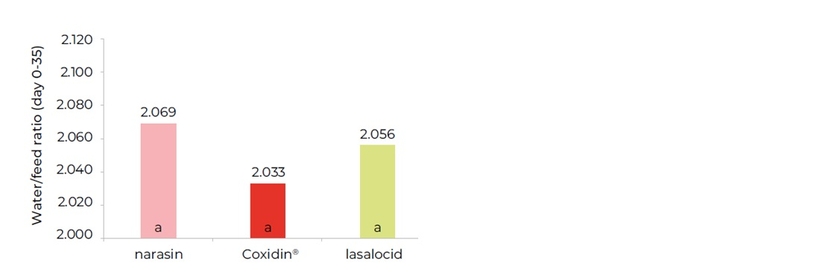
Figure 1. Water/feed ratio of different treatments from start to finish
Dry matter content of the faeces was, both on day 35 and on day 42, numerically higher for the Coxidin® group compared to the other groups.
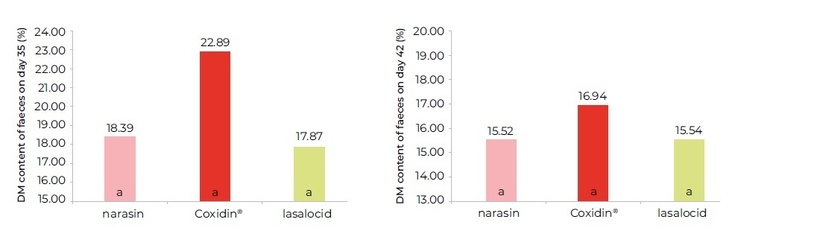
Figure 2. Dry matter content of faeces on day 35 (left) and day 42 (right)
Footpad lesions were scored on three separate days (21, 35 and 42) and the results are shown in Figure 3 below.
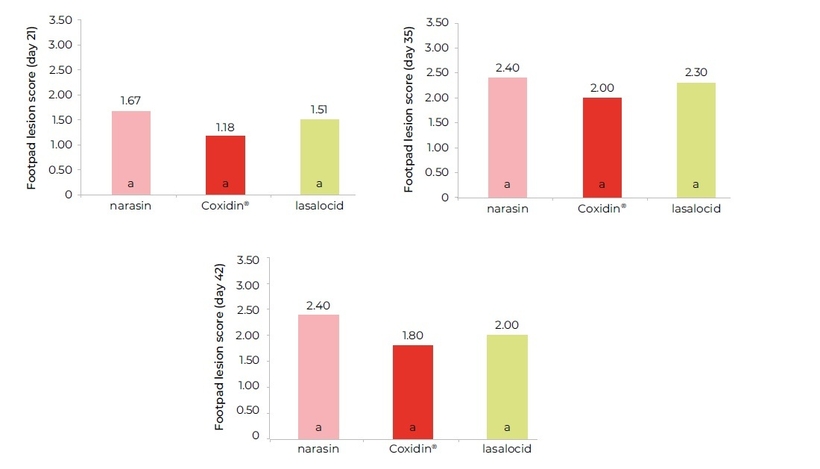
Figure 3. Footpad lesion scores for the different treatment groups on day 21 (top left), day 35 (top right) and day 42 (bottom)
Conclusion
Coxidin® had the lowest water/feed ratio compared with the other ionophores resulting in drier faeces and better footpad lesion scores, although it must be noted that the differences were only numerical and not significant. These benefits explain why most producers consider monensin to be a winter product, but this should not exclude the use of monensin in summertime. Coccidiostats should be used to control coccidiosis and in principle all products can be used at any time of the year.