Weaning To Winning: A Sneak Peak
Dennis SmuldersThe weaning period is widely recognised as one of the most challenging and high-risk phases in a pig's life. During this short but critical window, piglets are confronted with multiple simultaneous stressors like abrupt separation from the sow, a sudden transition from liquid to solid feed, social mixing, environmental changes, and exposure to new pathogens. At the same time, the digestive system and immune function of the piglet are still immature and poorly equipped to cope with these challenges.
From a physiological perspective, weaning can be associated with:
- reduced feed intake
- intestinal villus atrophy
- increased gut permeability
- disruption of the developing gut microbiota
These changes can compromise nutrient digestion and absorption, and create favourable conditions for enteric pathogens such as E. coli and Salmonella. Clinically, this often translates into post-weaning diarrhoea (PWD), growth checks, increased variability within batches and a higher need for therapeutic interventions.
The economic consequences of weaning-related problems are substantial. Reduced average daily gain and poorer feed efficiency during the nursery phase have long-lasting effects, as early-life growth setbacks are rarely fully compensated later in life. Increased morbidity and mortality, higher labour input, elevated antimicrobial use, and delayed time to market all contribute to higher production costs. In addition, variability introduced at weaning negatively impacts uniformity at finishing and slaughter, reducing overall system efficiency.
What does poor weaning really cost?
Even short-term setbacks during weaning can have long-lasting economic consequences:
- Reduced feed intake and growth retardation in the first weeks post-weaning are rarely fully compensated later, leading to lower lifetime performance.
- Post-weaning diarrhoea (PWD) increases treatment costs, labour input, and antimicrobial use, while also raising mortality risk.
- Higher variability within batches reduces uniformity at finishing and slaughter, negatively affecting system efficiency and planning.
- Delayed time to market and poorer feed efficiency increase cost per kilogram of pork produced.
Depending on severity and farm conditions, weaning-related problems are estimated to cost approximately €2-7 per pig1, through a combination of reduced performance, higher treatment costs, and efficiency losses. At herd level, these seemingly small losses can quickly add up, highlighting the value of preventing problems early rather than correcting them later.
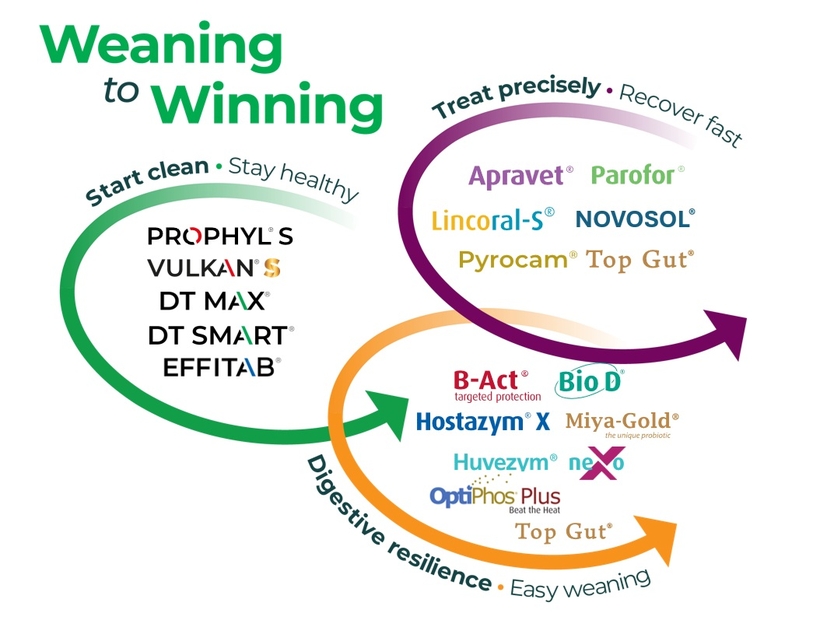
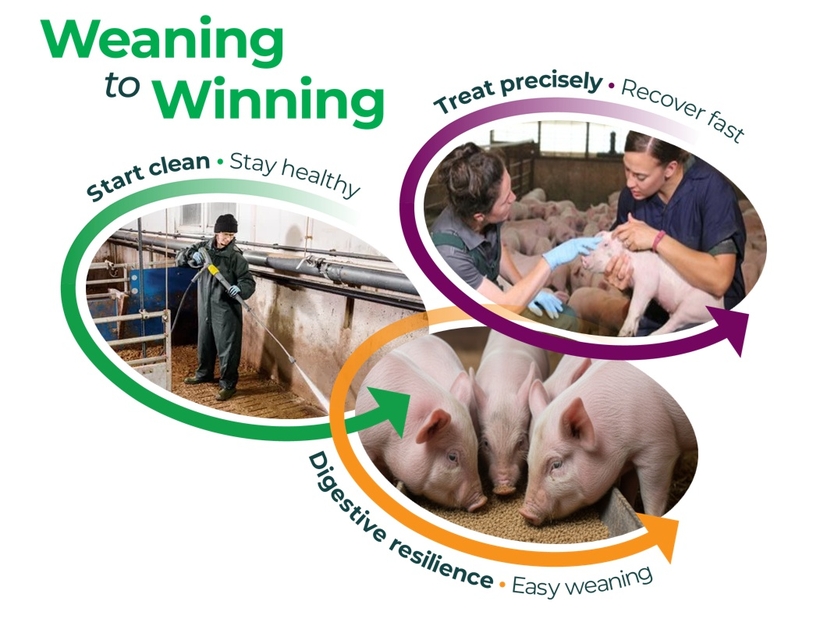
Against this background, successful weaning is no longer only a matter of nutrition or treatment alone - it requires an integrated approach that combines prevention, rapid intervention, and recovery support. This is the foundation of Weaning to Winning, Huvepharma®'s structured and practical strategy designed to support piglets through this critical transition and set them up for long-term performance.
Three pillars, one objective: resilient piglets
1. Digestive resilience - easy weaning
Strengthening digestive resilience is key to reducing the incidence and severity of post-weaning disturbances. Huvepharma® offers a comprehensive portfolio of feed additives designed to support gut development, microbial balance, and nutrient utilisation:
- Bio D®: a unique fermentation-derived 25-hydroxy-cholecalciferol. 25-hydroxy-cholecalciferol supports metabolic and immune function
- Probiotic solutions: B-Act® and Miya-Gold®/Top Gut®, supporting gut microbiota stability
- NSP enzymes: Hostazym® X and Huvezym® neXo, improving nutrient availability
- Phytase: OptiPhos® Plus, enhancing phosphorus utilisation
(Product availability may vary by country)
2. Treat precisely - recover rapidly
When intervention is required, rapid, precise and accurate treatment is essential to limit performance losses and animal discomfort. Correct dosing is a critical part of this approach, helping to ensure therapeutic efficacy while avoiding under- or overdosing. To support this in daily practice, the Huvepharma® Dose Calculator app provides veterinarians and producers with an easy-to-use tool to calculate accurate dosing both in feed and drinking water based on product, species, concentration of the active compound, daily dosage, and body weight.
Huvepharma®'s veterinary portfolio further supports effective therapy and pain relief during the weaning period, including:
- Apravet®: Apramycin premix and water-soluble powder
- Parofor®: Paromomycin premix and water-soluble powder
- Lincoral® S: Lincomycin and spectinomycin water-soluble powder
- Novosol®: Neomycin water-soluble powder
- Pyrocam®: Meloxicam oral suspension and injection
3. Start clean - stay healthy
Lowering pathogen pressure is a critical prerequisite for successful weaning. Robust biosecurity and sanitation protocols help reduce environmental and waterborne challenges, contributing to support future growth performance through the use of:
- Prophyl® S, Vulkan® S and DT Max® for premises cleaning and disinfection
- DT Smart®, Effitab® and Vulkan® S for drinking water sanitation
Together, these three pillars form an integrated, future-ready approach that aligns with current trends in antibiotic reduction, sustainability, and precision livestock production.
The Weaning to Winning concept will be officially launched at EuroTier (November 2026), with a dedicated brochure and on-stand materials.
Your input matters. Feel free to contact me at [email protected] and share your feedback - this is your opportunity to be in the front row as the concept takes shape.