
Why The Enzymatic Complex Of Xylanase, Cellulase And Xyloglucanase Makes The Difference In Monogastric Nutrition
Natalia SoaresCrude or dietary fibre are no longer viewed as inert diluents in monogastric nutrition. In broiler and piglet production, the nutritive value of modern diets is increasingly restricted by the presence of non-starch polysaccharides (NSPs) that are not hydrolysed by endogenous enzymes. These NSPs encapsulate starch, protein and lipids inside the plant cell wall, increase digesta viscosity when soluble fractions are present, and change fermentation patterns in ways that may compromise nutrient absorption, gut function and feed efficiency. To counteract such effects, exogenous carbohydrases have become important tools to improve digestibility and to widen the safe use of higher-fibre cereals and protein-rich by-products in poultry and swine feeds.
NSP profile of broiler and piglet diets
The NSP challenge differs by the type of ingredient. In cereals such as wheat, rye, triticale and wheat by-products, arabinoxylans predominate, while in barley and oats there are greater concentrations of mixed-linked β-glucans. In a maize-soybean meal diet, total NSPs can account for roughly 8-10% of the diet. The soluble fraction of NSPs is particularly relevant in young animals because it can increase intestinal viscosity and impair the diffusion of digestive enzymes and absorption of nutrients.
In monogastric animal diets, fibre-rich cereals and by-products are increasingly used to control cost and support gut function; however, soluble and insoluble NSPs may reduce ileal nutrient digestibility, alter digesta rheology and shift hindgut fermentation away from optimal patterns, becoming even more relevant during early phases when the digestive system is still immature.
Protein sources in monogastric diets are mainly from dicotyledonous (dicot) plants which have a different cell-wall architecture when compared with cereals. Instead of being dominated by arabinoxylans (as in cereals), soybean meal, rapeseed meal and sunflower meal contain a more complex matrix of pectic polysaccharides, cellulose and hemicelluloses such as xyloglucans, xylans and galactomannans (Table 1). This distinction matters because the needed enzymes should follow the substrate structure. In practice this means that poultry and swine diets using alternative protein meals may require a broader carbohydrase concept than xylanase alone if the objective is to maximise energy and amino acid release from the cell-wall matrix.
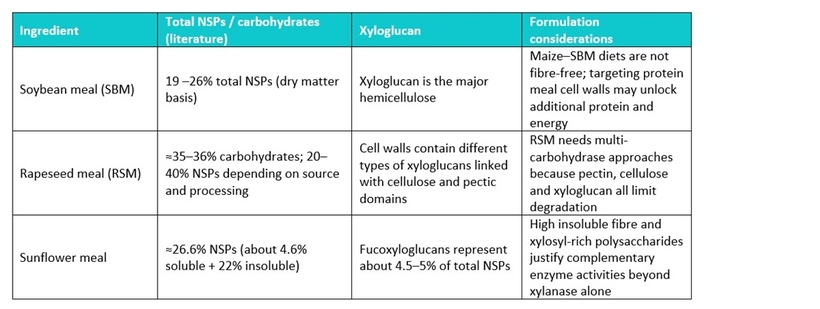
Table 1. Ingredient-specific NSP and xyloglucan considerations
Why xyloglucan deserves more attention in soy-, rapeseed- and sunflower-based formulations
Xyloglucan is particularly relevant in protein-rich dicot by-products because it acts as a structural tether around cellulose microfibrils in the primary cell wall.
This structural role explains why a xyloglucanase activity can be advantageous. By hydrolysing xyloglucan backbones that cross-link cellulose-rich regions, a xyloglucanase can open the cell-wall matrix, reduce the physical entrapment of intracellular nutrients and improve access for both endogenous enzymes and complementary exogenous activities such as cellulase. In practical terms, the benefit is not limited to fibre degradation; it is the secondary action of the release of starch, amino acids, lipids and fermentable oligosaccharides that makes xyloglucanase strategically attractive in soy, rapeseed and sunflower by-products.
Implications for enzyme strategy in monogastric feeds
From a formulation perspective, xylanase remains indispensable for cereal arabinoxylans and for xylosyl-rich fractions in by-products. Cellulase contributes by attacking the cellulose scaffold that remains in both cereal brans and oilseed meals. A xyloglucanase adds value where dicot cell walls are prominent, particularly in soybean meal, rapeseed meal and sunflower meal, because it targets a structural bottleneck that xylanase alone cannot fuly overcome. Huvezym® neXo is an enzymatic complex containing the three activities which optimise the use of fibre, leading to:
- improved nutrient release
- reduced anti-nutritive viscosity
- more efficient hindgut fermentation
- greater flexibility to use lower-cost or more sustainable feed ingredients without compromising animal performance
Conclusion
Huvezym® neXo is a unique nutritional tool, key to the efficient utilisation of modern monogastric diets because fibre is not a single substrate but a family of structurally diverse barriers.
In monogastric animals,
- xylanase is essential for cereal arabinoxylans and viscosity control
- cellulase helps dismantle the cellulose framework that limits access to entrapped nutrients
- xyloglucanase is a logical next-generation tool for dicot-derived protein meals in which xyloglucan is a central architectural polysaccharide
Together, these activities can increase digestibility, enhance the productive value of soybean, rapeseed and sunflower by-products, improve feed conversion and support overall animal production efficiency. As feed formulation moves toward greater use of alternative raw materials, enzyme programs designed around xylan, cellulose and xyloglucan will become increasingly important for both economic and nutritional performance.